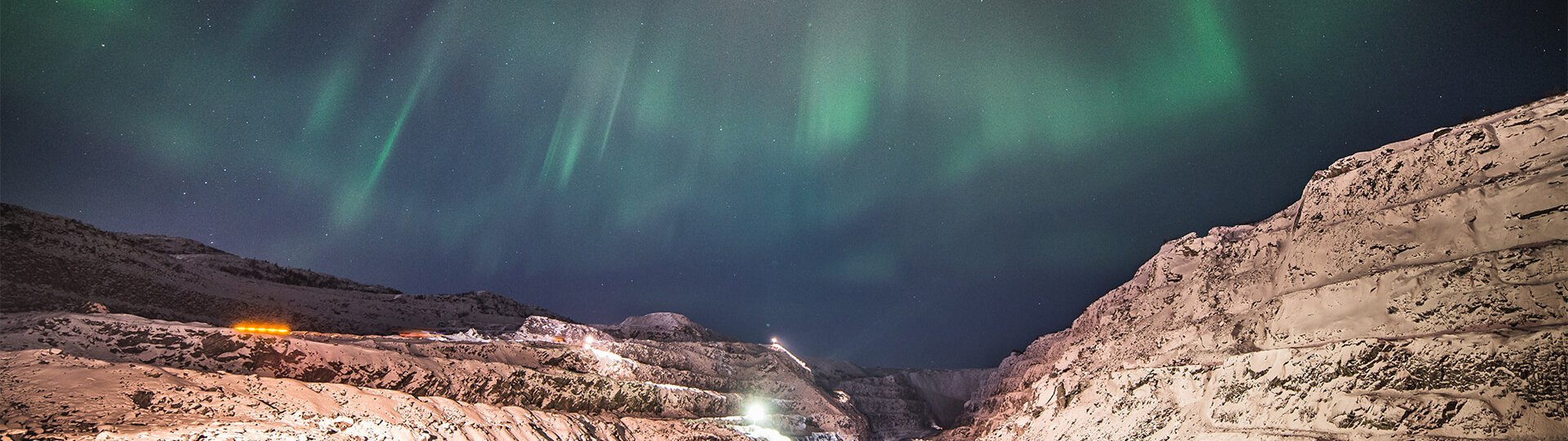
Mine inspector, Tellef Dahll, first discovered iron ore deposits. in 1905 Christian A. Anker was granted a permit to mine in Sør-Varanger. German, Swedish and Norwegian private capital was invested.
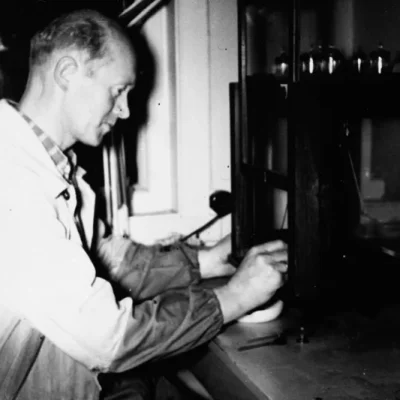
1866
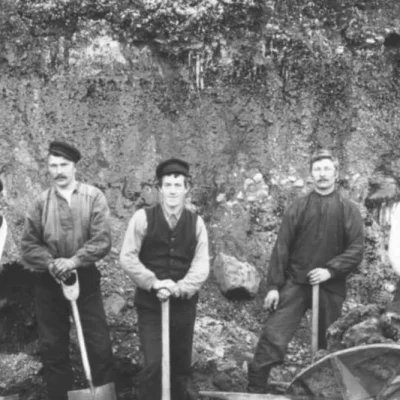
1910
The first load of iron ore was railed from the Bjørnevatn ore deposit to the town of Kirkenes. The mine operated from 1910 to 1997 with over 200 million tonnes of ore unearthed. Sydvaranger was the largest mine in Norway for most of this period.
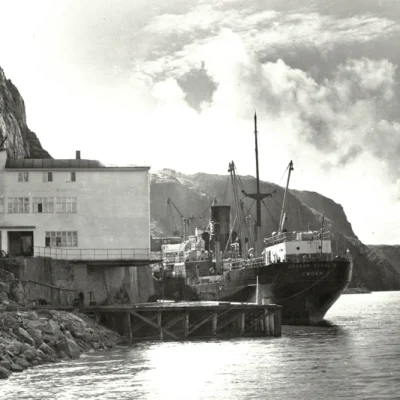
1940
The mine was operated by German forces during World War II. As a result of the considerable conflict in the area and Sydvaranger’s strategic importance, significant damage to infrastructure and facilities was incurred. The mine infrastructure was subsequently rebuilt with the assistance of Marshall Plan funding by the Norwegian government, leading to a highly profitable period for the mine in the 1950’s and 1960’s.
1960
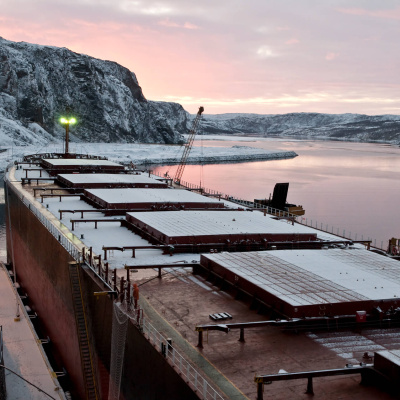
Large government investments in long-term infrastructure took place in the 1960’s, 1970’s and 1980’s offsetting the challenge of lower iron ore prices. The mine remained government-owned and operated until 1997, as an asset of significant strategic regional importance due to its proximity to Russia. The majority of the capital works from this period remain intact. Extensive production facilities were constructed within and beneath the surrounding country rock in the town of Kirkenes, including silos to ensure a weatherproof and efficient port operation, a five-story underground crusher facility, extensive ancillary underground tunnels, and a conveyor network. US$470m was spent on capital works in the 15 years leading up to 1997. Unfortunately, the company was forced to close in 1997 due to persistently low iron ore prices and the subsidence of cold war tensions.
2009-2015
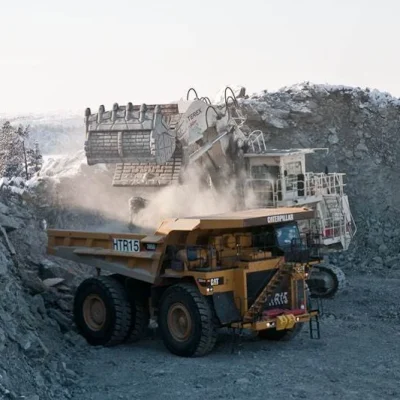
The mine operated from 2009 to November 2015 with 20 million tonnes of ore mined and 8 million tonnes of magnetite concentrate (68% Fe) sold to Europe, the Middle East and China. The product is well known for its exothermic and low impurity characteristics. More than US$250 million was invested in new equipment, refurbishment, and debottlenecking of the processing facilities. The mine and production facilities operated with increasing efficiency, reliability, and lower costs until November 2015 – however, rapid global iron ore market deterioration in 2015 forced the mine to close once again.
2016-2020
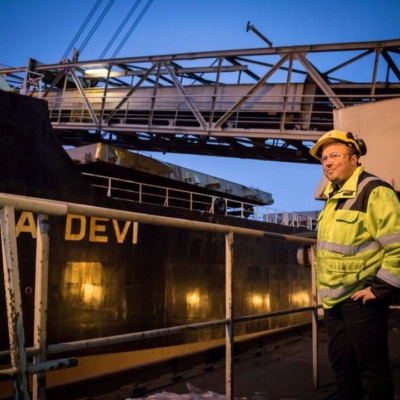
In April 2016, the Tschudi Group acquired the Sydvaranger assets. All equipment necessary for the restart of operations was secured and has since been carefully maintained. All necessary operating permits are also in place, with the mining permit granted in the spring of 2019.
2021
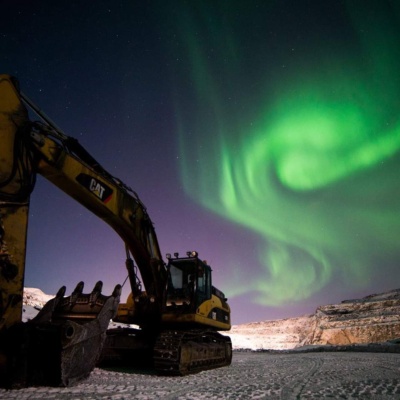
In January 2021 Sydvaranger was merged with Tacora Resources Inc.
Tacora is an iron ore mining and mineral processing company focused on the acquisition, development and operation of iron ore reserves and assets which allow for the sale of high-grade and quality iron ore products. Tacora also owns and operates the Scully Mine, located in Wabush, Newfoundland and Labrador.
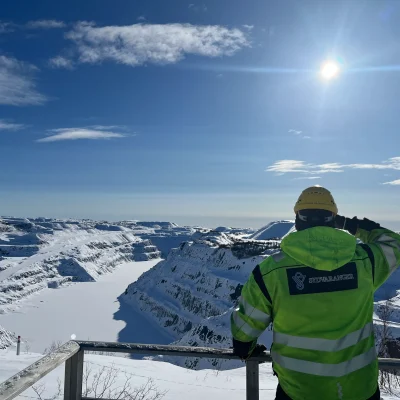
2024
Grangex AB completes the acquisition of Sydvaranger with the vision of becoming one of Europe’s largest producers of highly concentrated iron ore (DRI) for the green shift. We will produce iron ore concentrate with over 70% iron content – a product with high demand globally.